AProblem
People were leaving mid-flow
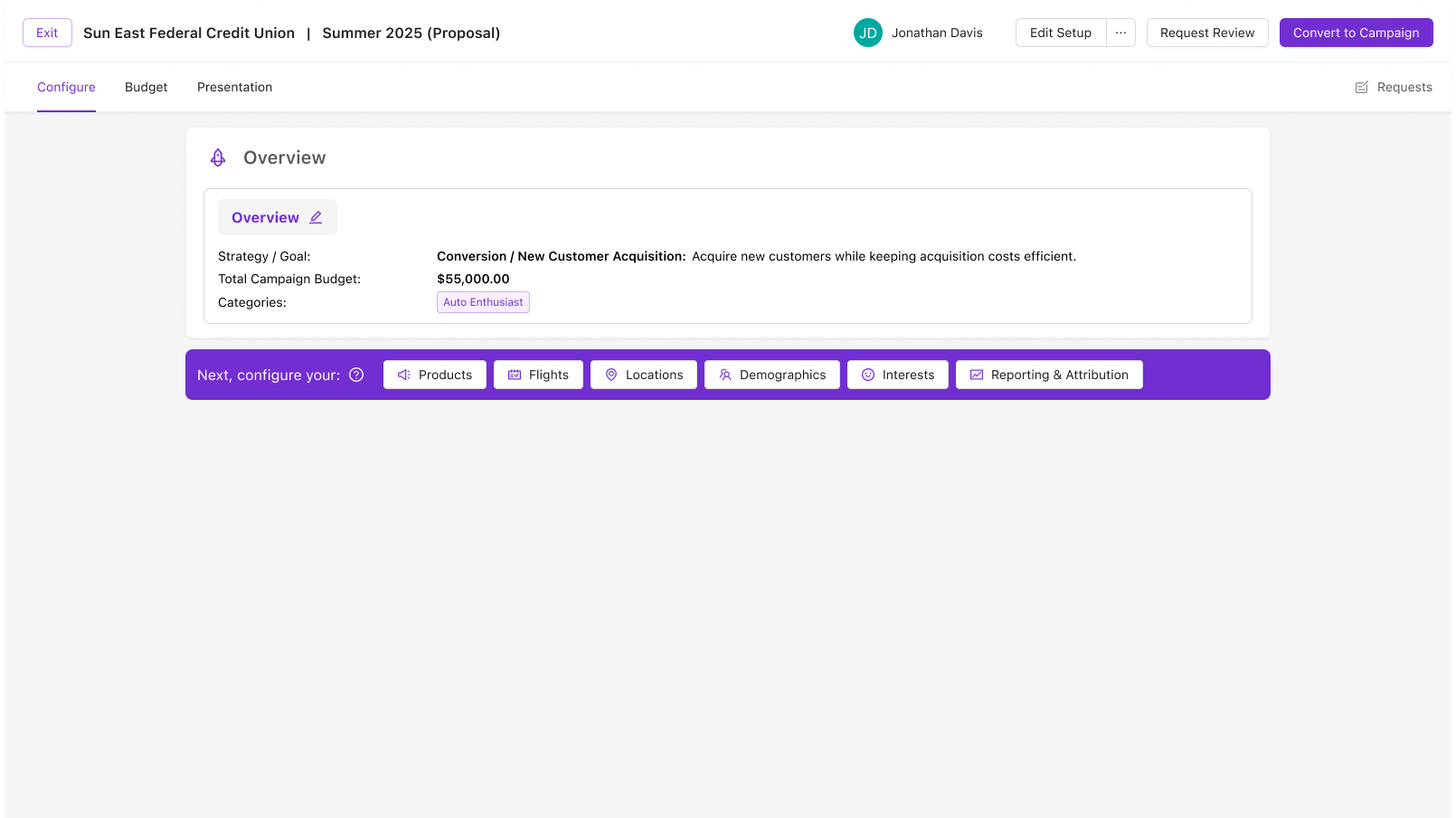
Users were abandoning the campaign creation flow mid-process. When our team followed up, the pattern was consistent: people didn’t know if what they were building would actually work, and they didn’t know what steps were left before they could launch.
Rather than push forward uncertain, they’d stop and go ask a coworker how they’d handled a similar campaign — pulling them out of the product entirely, sometimes for good.
That told us we had two distinct problems, not one:
- No confidence signal. Users had no way to gauge campaign performance before committing, so they second-guessed themselves.
- No sense of progress. Users didn’t know what was required to get to “live,” so the path forward felt open-ended.
BResearch
It wasn’t a bug. It was a confidence gap.
I ran interviews with customers who churned or stalled during campaign creation and asked directly why they left. The answer wasn’t a bug or a confusing UI element. Users were making a judgment call they didn’t feel equipped to make, and their instinct was to find a human who’d made that call before rather than trust the tool.
“I didn’t know exactly what to include to make the presentation and proposal land, so I asked a coworker how they’d handled it, then came back and reworked mine.”Customer interview, 1 of 5
CApproach
Three tools, matched to the question
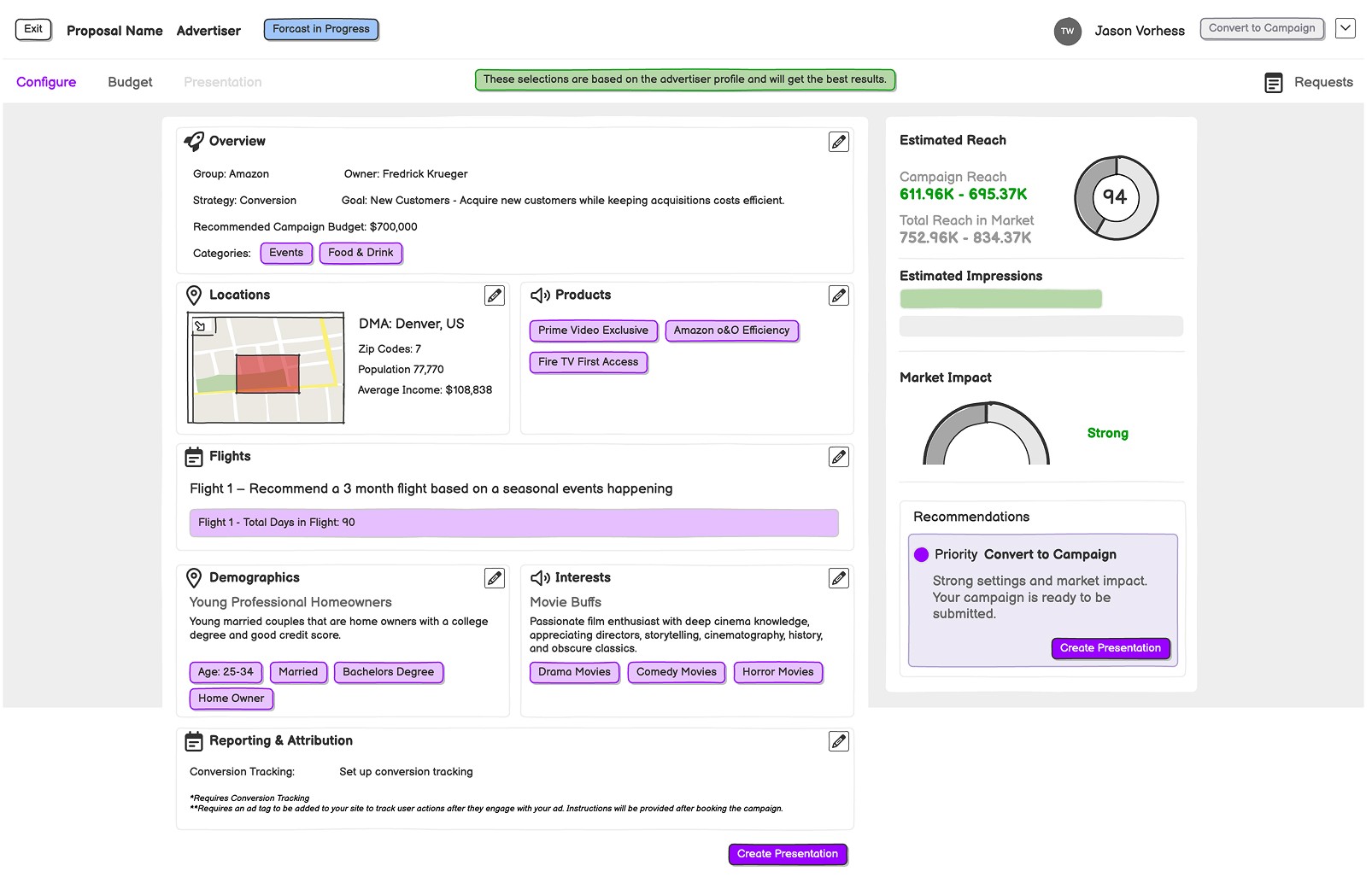
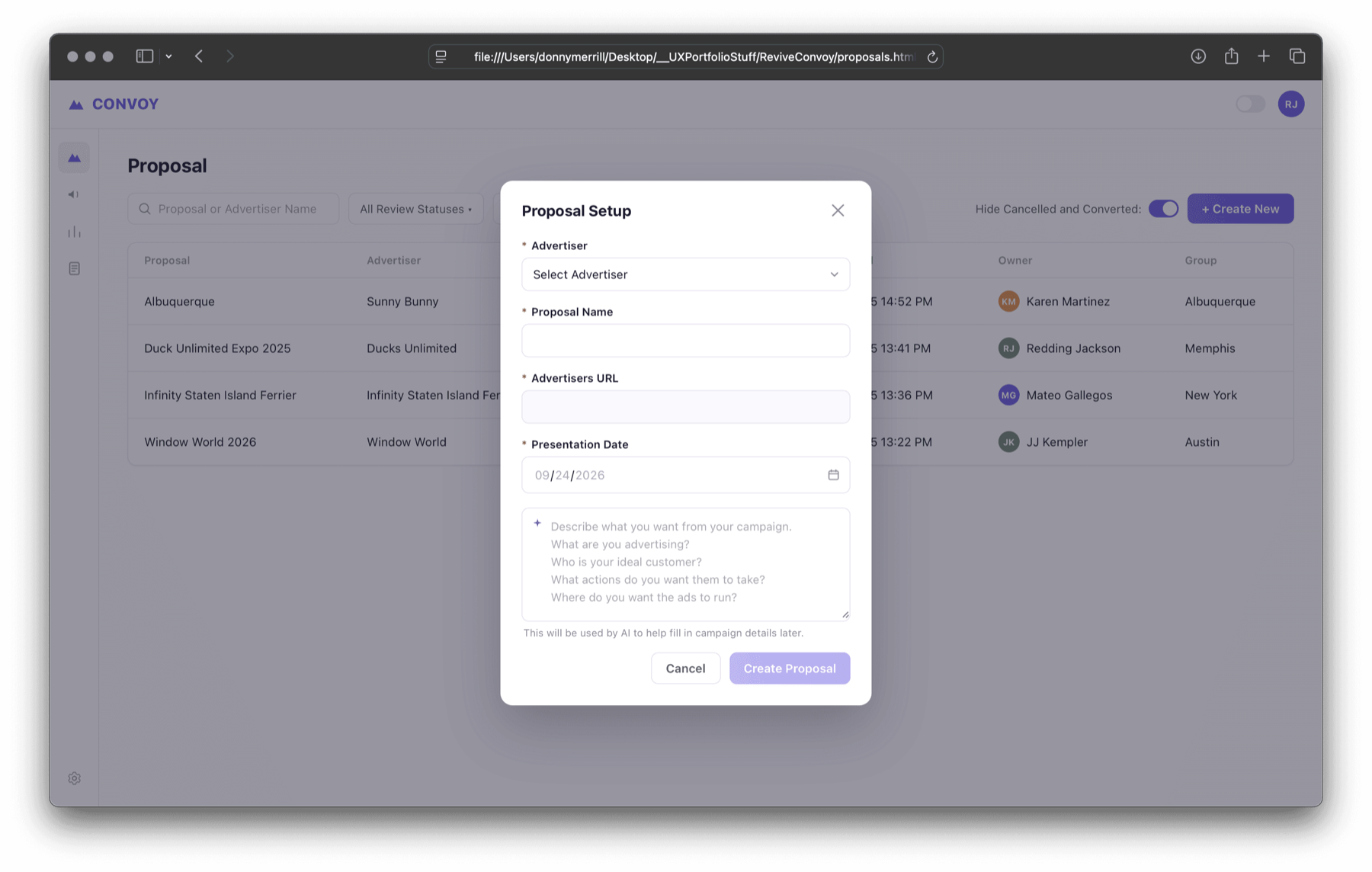
- BalsamiqRapid wireframes for quick conversations with customers, before anyone got attached to a layout.
- ClaudeA clickable prototype, built fast, so we could test the real flow instead of describing it.
- FigmaThe pixel-perfect version for developer handoff.
DSolution
A forecast and a checklist
Two connected interventions, addressing each problem directly:
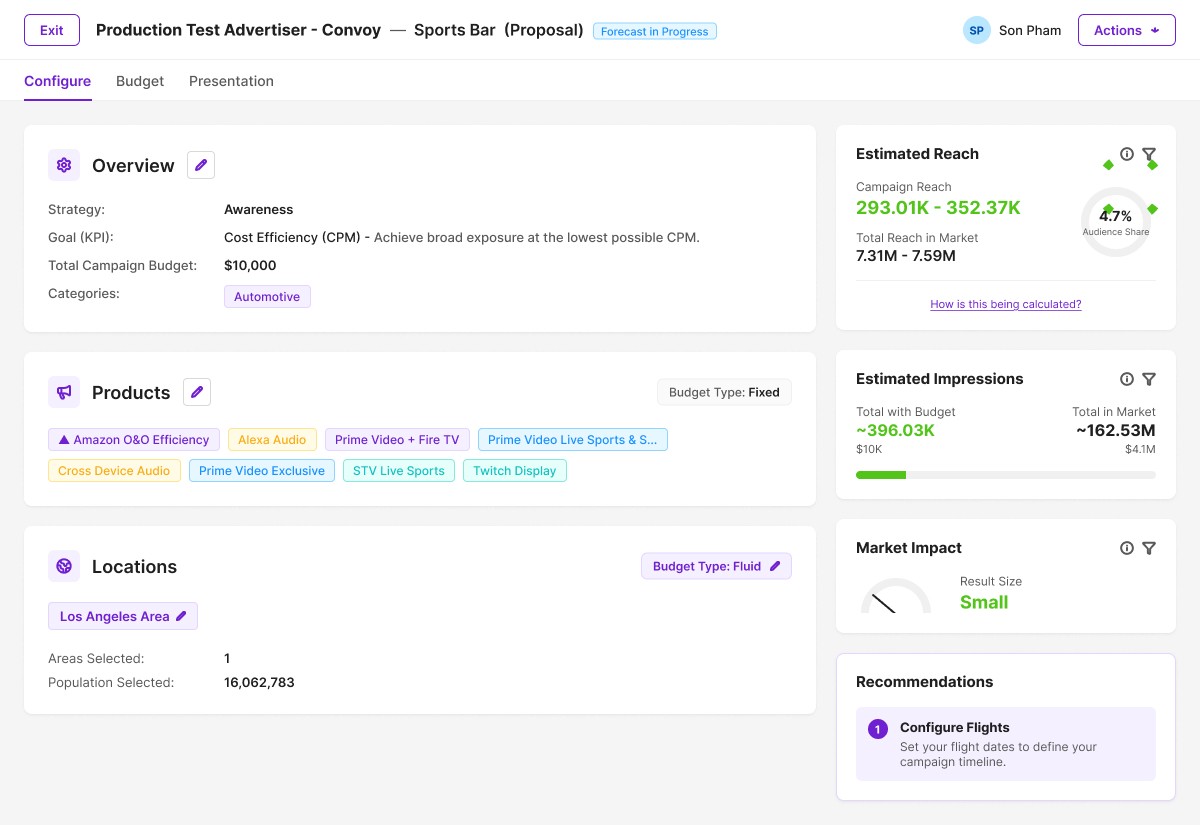
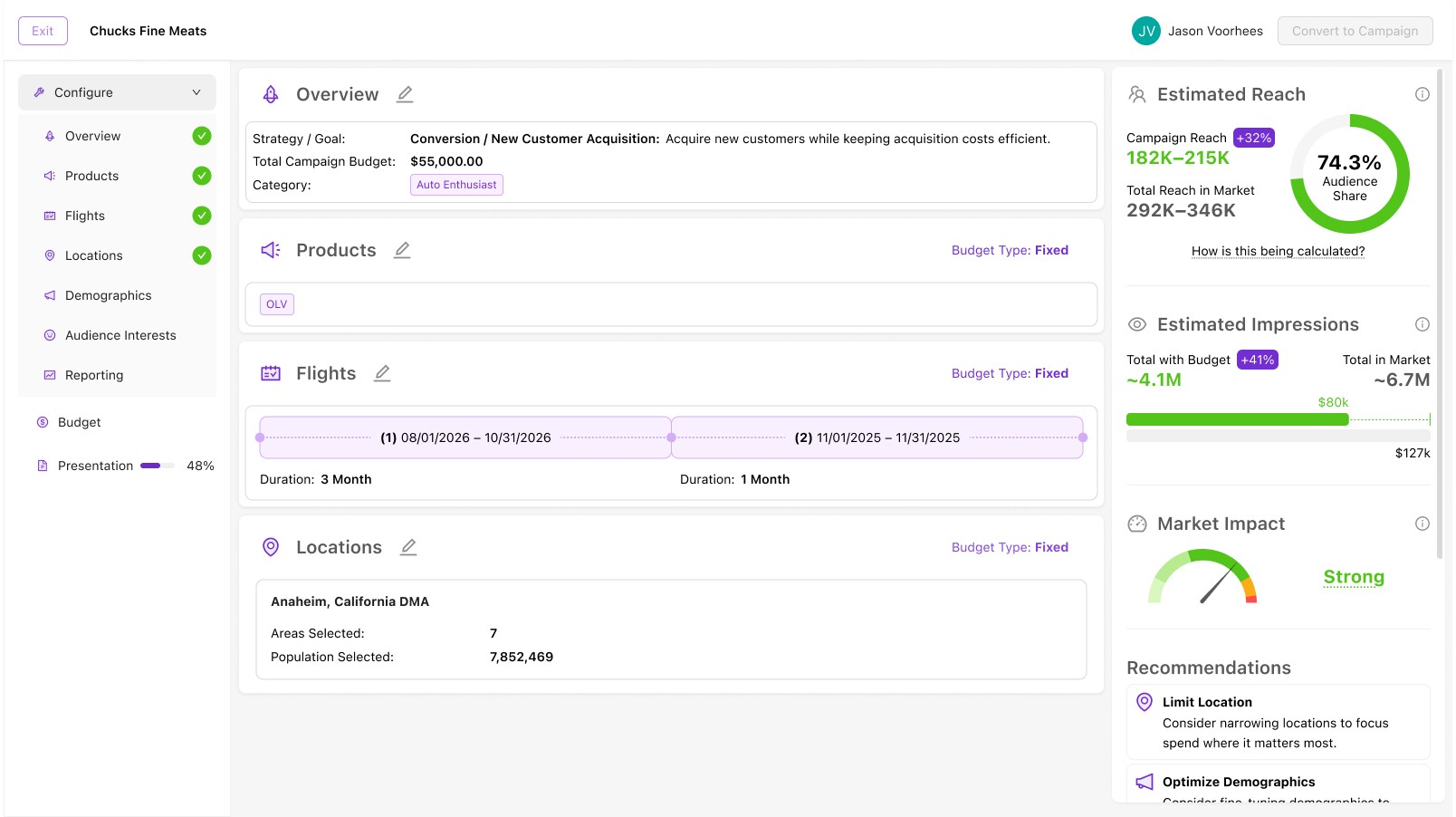
- Compass. An AI tool that predicts how well a campaign will perform before launch, giving users the confidence signal they were leaving the product to get from a coworker.
- Progress navigation. A panel on the left side of the flow showing what’s complete and what’s still required to go live — replacing ambiguity with a clear checklist.
EImpact
Campaigns that actually launch
- 84% increase in campaigns going live
- 2 days cut from average time-to-live
- 66% decrease in customer help calls
- Strong positive reception from customers